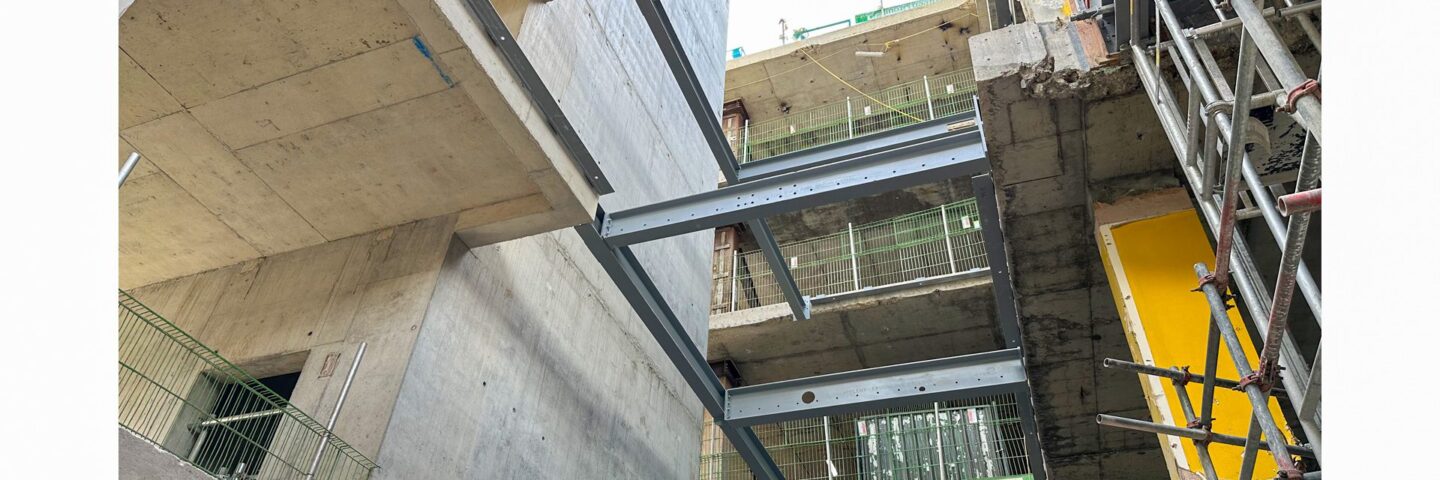
From modular construction techniques to harnessing renewable energy, the construction industry is reshaping its approach to create more environmentally conscious and resilient structures. Amid these efforts, material reuse and recycling emerge as key to a more sustainable future. This article delves into the process of forging sustainability within architecture through urban mining, focusing on FORE Partnership’s Tower Bridge Court. ECE is appointed as the executive architect on the project, which showcases the potential of repurposing steel in construction.
Reusing structural steelwork and the circular economy
Circular economy principles are taking root in the architecture and construction landscape, with practices such as renewable energy integration and waste reduction leading to a more sustainable approach to building. The strategic reuse and recycling of materials is proving to be significant in reducing carbon emissions.
This approach is being championed at Tower Bridge Court, a retrofit of an existing five-storey office building located on the south bank of the River Thames near the iconic Tower Bridge in central London.
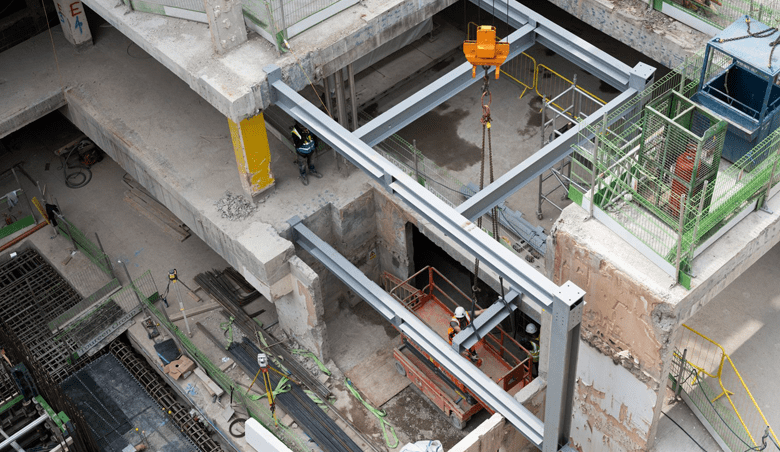
The process, known as ‘urban mining’, came to fruition after the project developer, FORE Partnership, secured a deal with Civic Engineers to re-use steelwork from the House of Fraser (HoF) refurbishment on Oxford Street. After liaising with McLaren, the main contractor at the HoF refurbishment, the team salvaged 40 tonnes of pre-Second world War steel for reuse in Tower Bridge Court and ultimately aims to install 10% of the steel from circular sources during construction. This is projected to save approximately 48 tonnes of carbon dioxide when compared to installing an entirely new steel frame.
The salvaged steel beams will be left visible in some areas of the building in order to celebrate London’s industrial past and educate occupants on the benefits of driving forward circular economic principles.
The remainder of the new steel frame used on the project is to be formed with minimum 56% recycled content.
Challenges faced with reusing steel
ECE Architecture, led by Associate Nick Mayo, is supporting the project, having been appointed by Willmott Dixon in August 2022.
The timing of incorporating the salvaged steel into the scheme, currently at RIBA Stage 5, necessitated a methodical and collaborative approach by the whole design team.
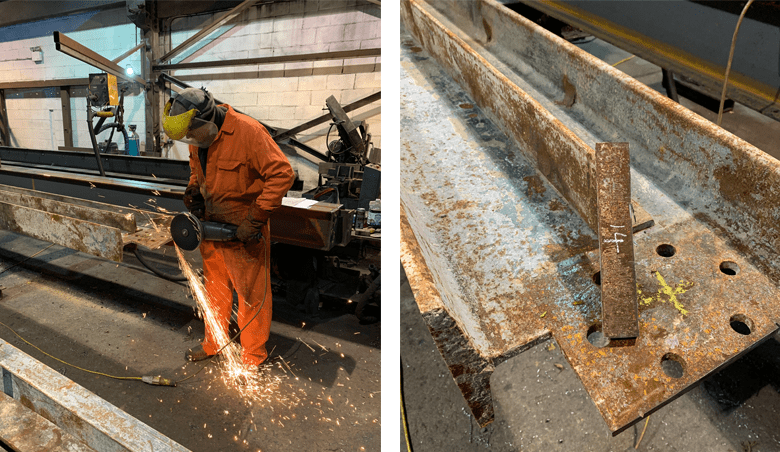
In the first instance, the process required the steel fabricator, FourBay, to carry out a series of physical tests on the steel to determine whether it was fit for purpose. To our knowledge, this is the first time steel of this age has been used in a UK construction project.
The project structural engineers, Webb Yates, then meticulously identified useable steel lengths in order to minimise cutting and unnecessary wastage.
Following receipt of revised structural drawings, the design team then carried out a series of checks through focused workshops in order to ensure the original design was not adversely affected. This involved checking junctions, details and critical levels.
Adaptability shapes the future
As the journey of steel repurposing at Tower Bridge Court demonstrates, the path to a circular economy is paved with challenges, which require creative problem-solving, and interdisciplinary cooperation. For any architects involved in a similar urban mining project, Nick Mayo offers the following advice:
- Undertake checks of distortions and damaged areas to ensure the steelwork is fit for purpose and visually acceptable where left exposed.
- Be aware that older steel section sizes can be significantly deeper than the modern equivalent and assess the implications as early as possible.
- Request connection details for review in order to make the visual appearance of exposed steels as neat as possible. As with all steelwork, thought should be given to the design of fixings to allow for future disassembly and adaptability of the structural frame.
- Ensure that the steel is compatible with specified intumescent coatings where required.
- Engage in the process with the structural engineer and steel fabricator.
- Ask questions! The process is often new to many consultants so working through the challenges in a systematic, collaborative way is essential.
A willingness to question, adapt, and innovate forms the cornerstone of successful circular initiatives, emphasising that transformation comes from the collective determination to build a sustainable world.