Bankside House, Small Dole
Back to projects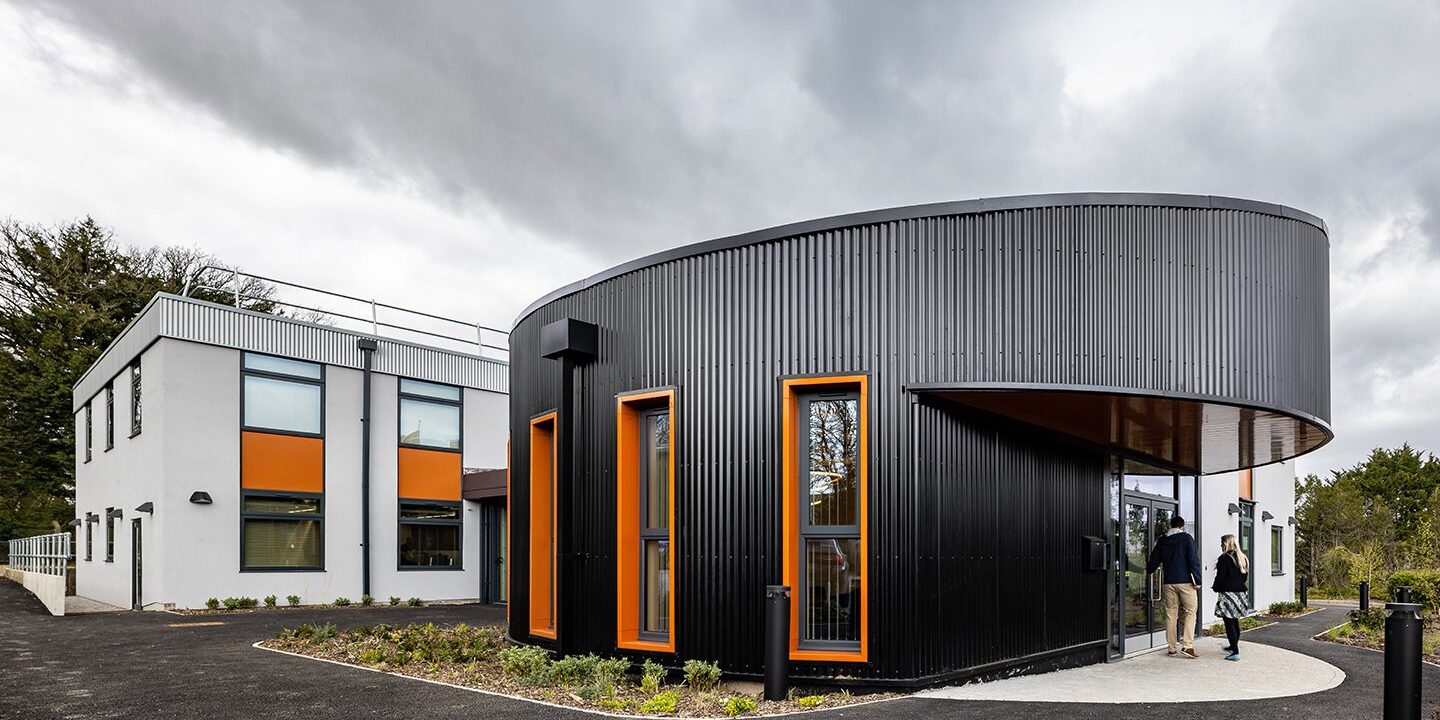
ECE Architecture
Reimagining a 1960s office into a contemporary, sustainable workplace. Proving that retrofit can deliver exceptional performance whilst honouring a company’s roots.
For JT Mackley and Van Oord, the choice was clear: transform, don’t relocate. Bankside House needed more than cosmetic updates; it required a complete rethink. Through a fabric-first retrofit approach, we upgraded this outdated office into a high-performing, flexible workspace that meets the demands of modern working life.
Sustainability sat at the heart of every decision. We upgraded the building fabric through cavity wall insulation, replaced outdated windows, and installed photovoltaic panels across the newly insulated roof. Transitioning from oil to Air Source Heat Pumps (ASHP) and incorporating Mechanical Ventilation with Heat Recovery (MVHR) systems resulted in an efficient, all-electric building. By prioritising improvements through a fabric-first approach, we reduced energy demand at source.
These measures dramatically reduced the environmental impact, improving U-values by up to 87%, ensuring genuine value delivery within the budget and reducing the performance gap. A significant outcome was the leap in the building’s EPC score, rising from a D (84) to an A (17), future-proofing it against upcoming Minimum Energy Efficiency Standards (MEES) legislation targeting EPC B by 2030.
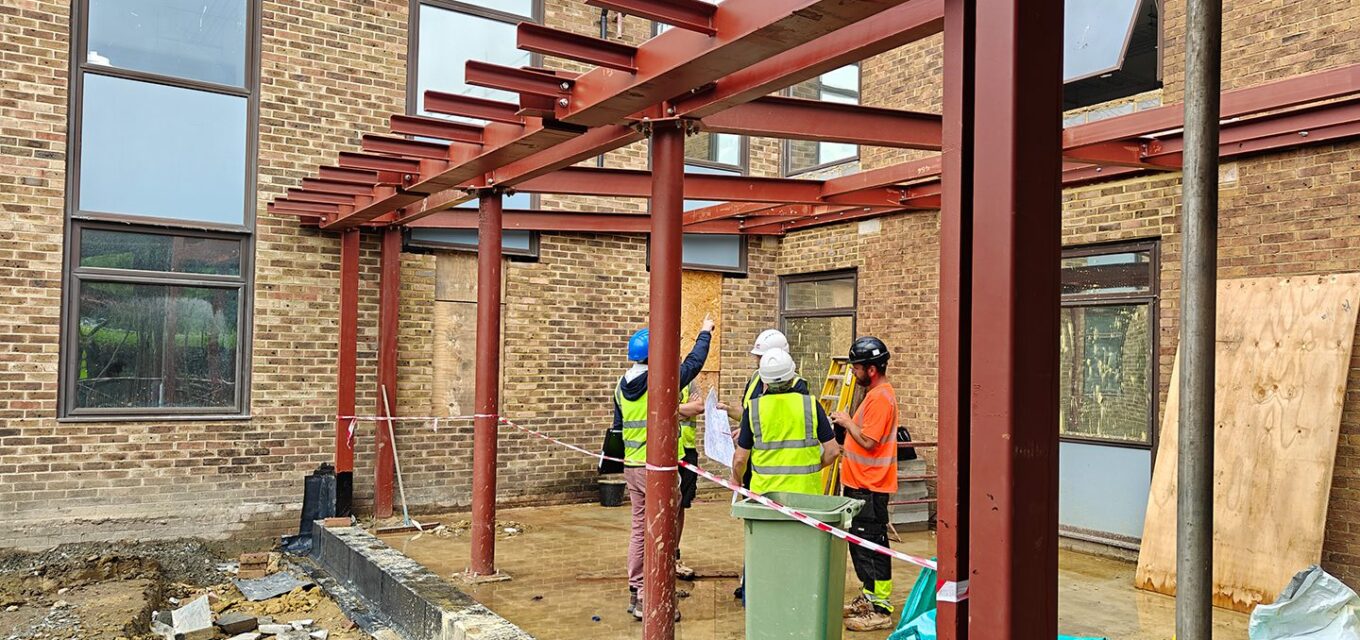
Commercial retrofit brings complex challenges. Bankside House had evolved through multiple extensions since the 1960s, each with different construction types. Upgrading insulation across these varying fabrics required careful consideration and bespoke solutions.
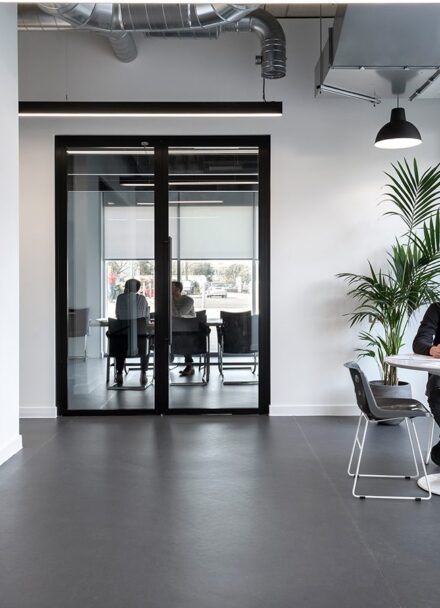
Integrating new services presented another hurdle, as ceiling heights needed to be protected whilst accommodating MVHR ductwork and upgraded systems. Rather than compromising headroom with suspended ceilings, we exposed services, creating a contemporary industrial aesthetic. The shift to all-electric systems, which included installing EV charging infrastructure, also necessitated a significant substation upgrade, representing a critical factor in the project’s overall feasibility.
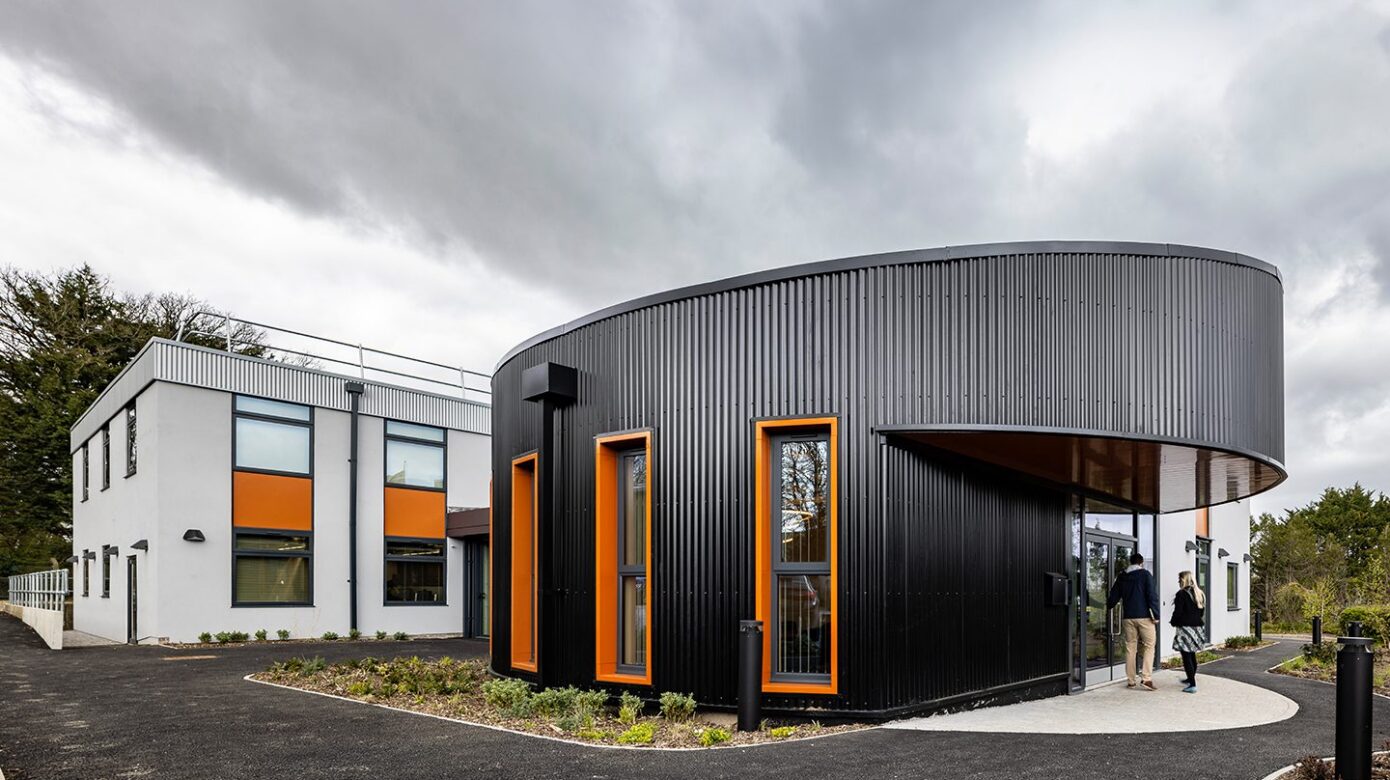
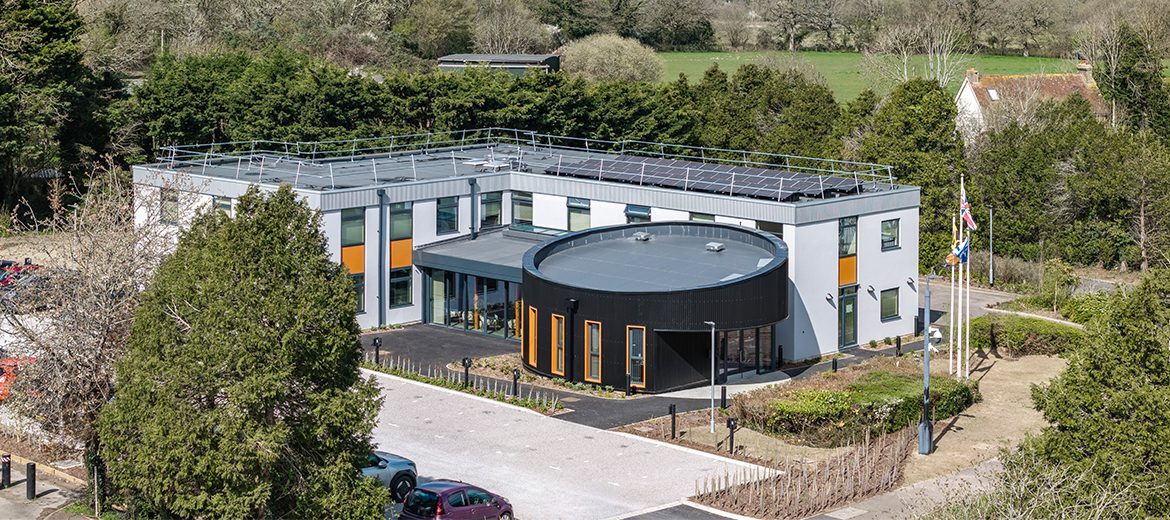
The design transformation extended beyond energy performance. A new single-storey extension and distinctive rotunda clad in black corrugated aluminium, housing a boardroom and communal work space, creates a bold architectural statement.
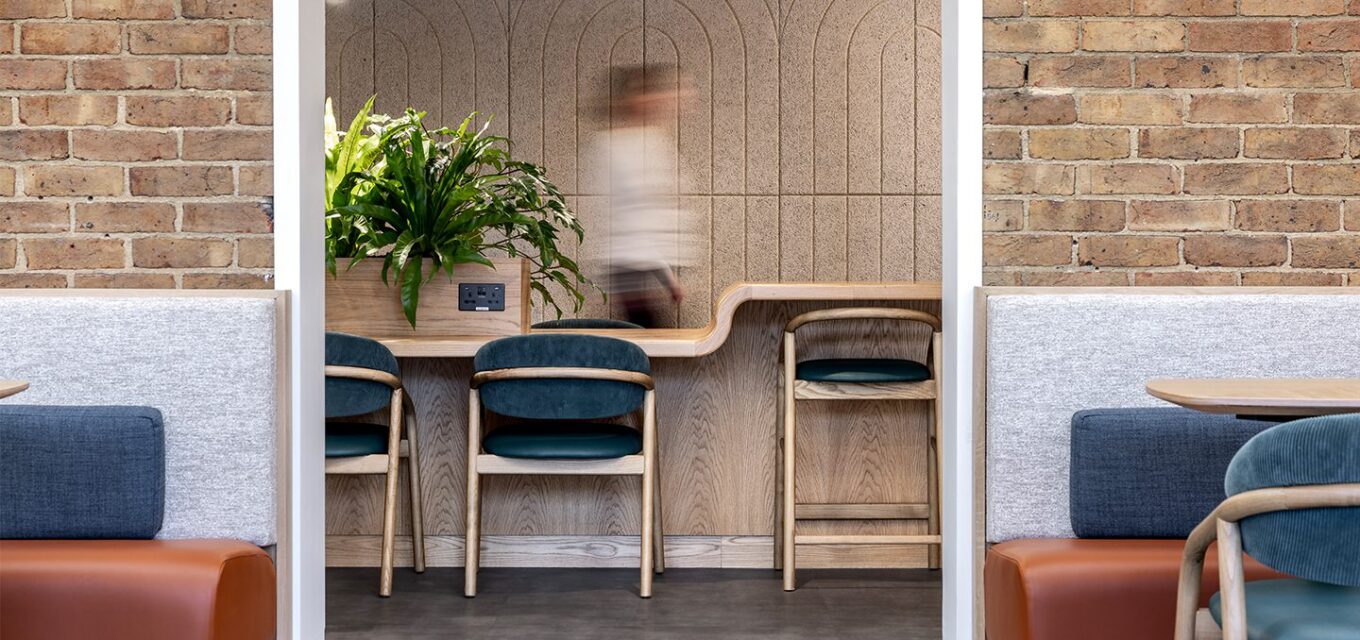
At the building’s heart, we introduced a central ‘social link’, inspired by our own ECE studio, where teams gather, collaborate, and welcome clients. The existing brick building received fresh render, with feature spandrel panels connecting visually to Van Oord’s Rotterdam headquarters. Inside, cellular offices gave way to open-plan flexibility, touchdown spaces, and meeting rooms of various sizes. The material palette remains uncomplicated and industrial – economic, robust, and requiring minimal maintenance.
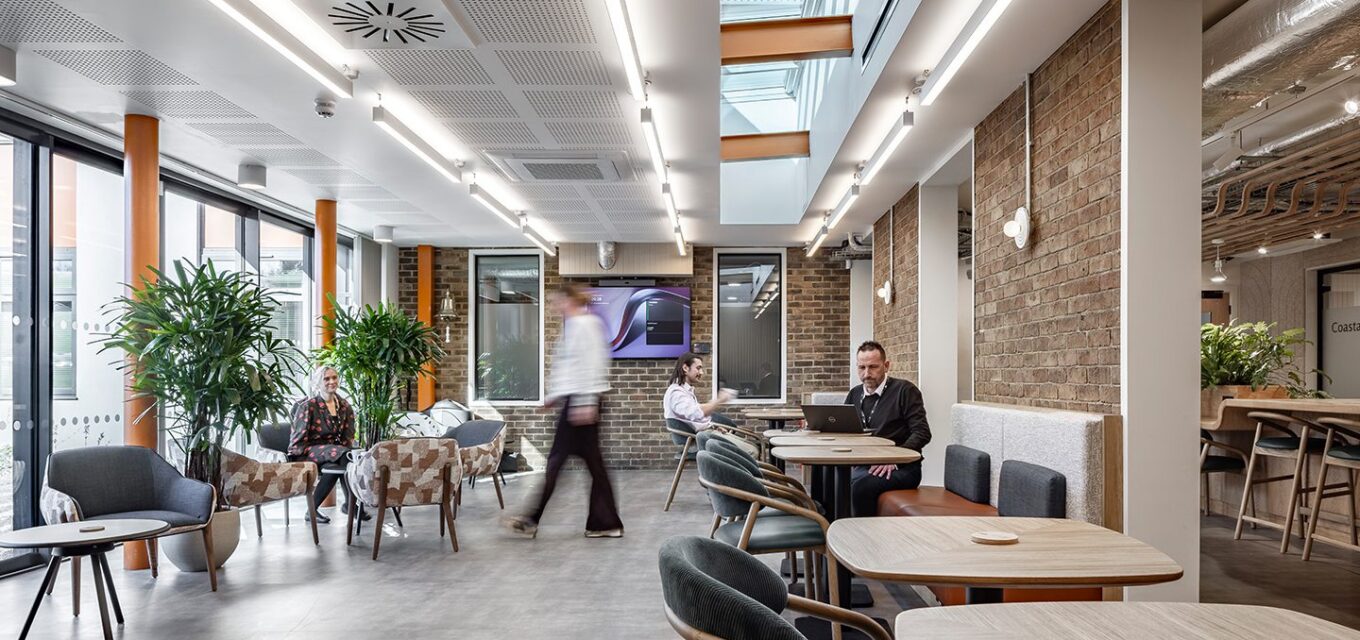
Bankside House proves that commercial retrofit can deliver total workplace transformation. Beyond impressive thermal performance, we created contemporary workspaces aligned with how people actually work today. Most importantly, JT Mackley + Van Oord maintained their connection to their historic base whilst securing a sustainable, future-proofed office for decades ahead.
What next?
Discover how we bring our clients’ vision to life. Browse our work to see creative excellence paired with technical precision.