Victoria Road
Back to projects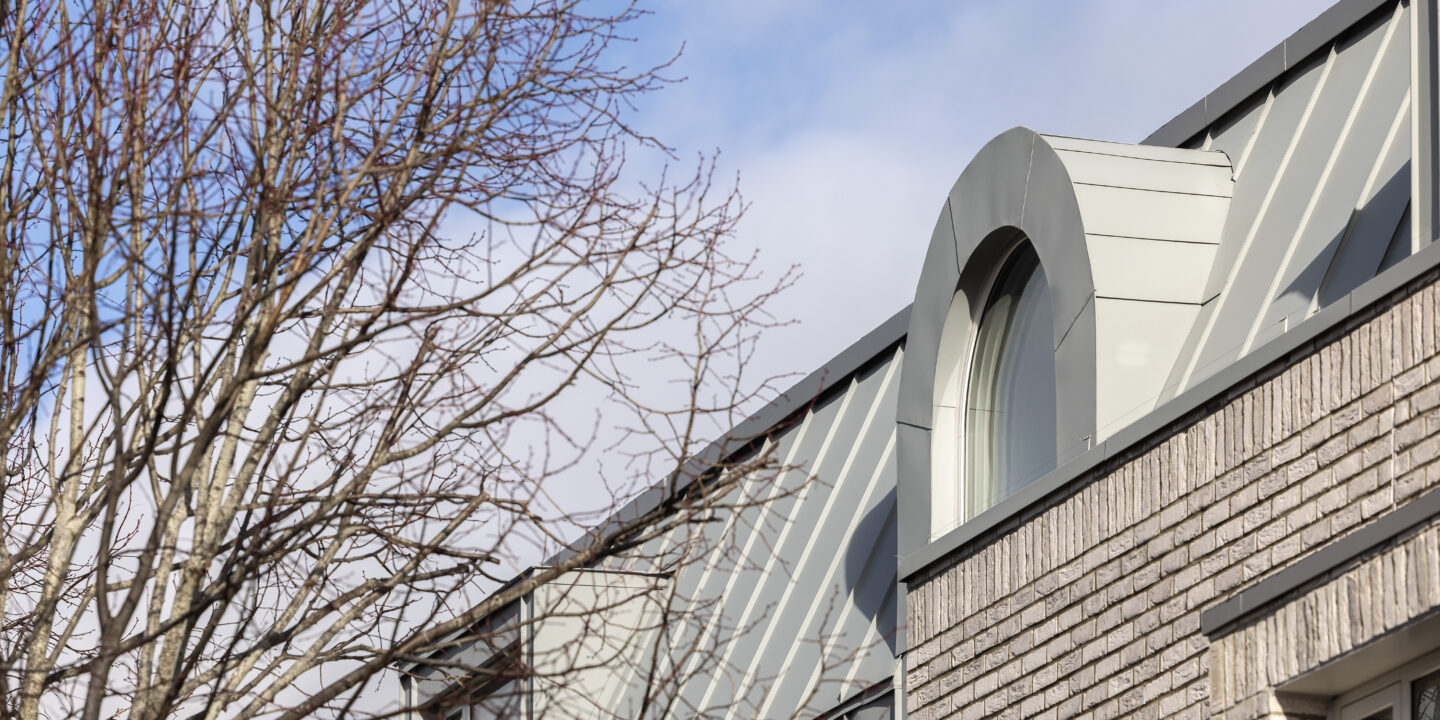
ECE Architecture
Reimagining emergency accommodation through Passivhaus design. A project delivering sustainable housing for vulnerable residents while generating substantial cost savings for Worthing Borough Council.
This landmark project is the council’s first venture into Passivhaus standards, and addresses the urgent need for quality emergency accommodation. Our team conducted comprehensive feasibility studies demonstrating how aiming for Passivhaus certification could deliver both environmental performance and economic value, creating a template for future emergency housing projects.
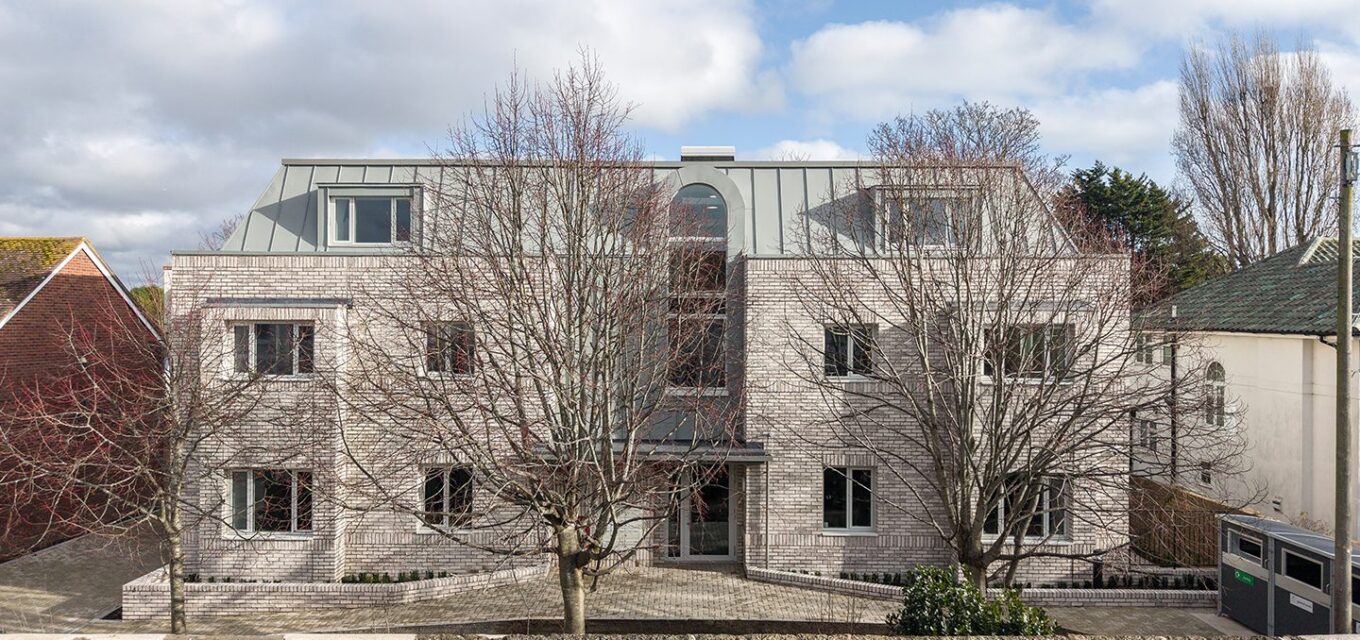
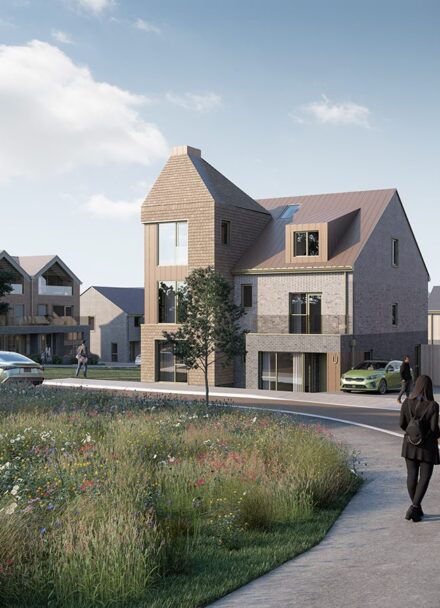
The scheme comprises 11 thoughtfully designed one and two-bedroom apartments over three storeys, specifically created for women with children requiring temporary accommodation for up to one year. With an estimated 76% improvement in Space Heating Demand over Part L1 2022 compared to traditional buildings, this development combines design excellence with ambitious sustainability goals.
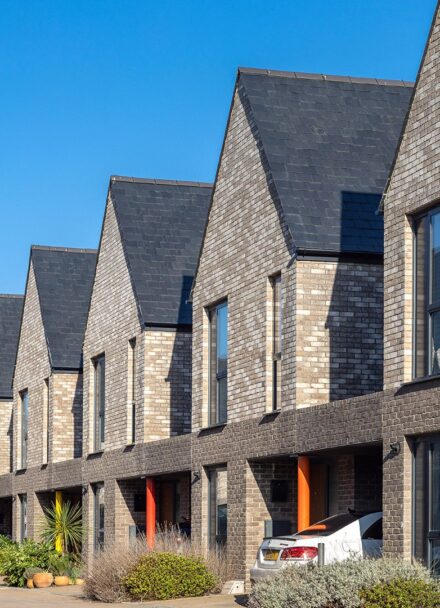
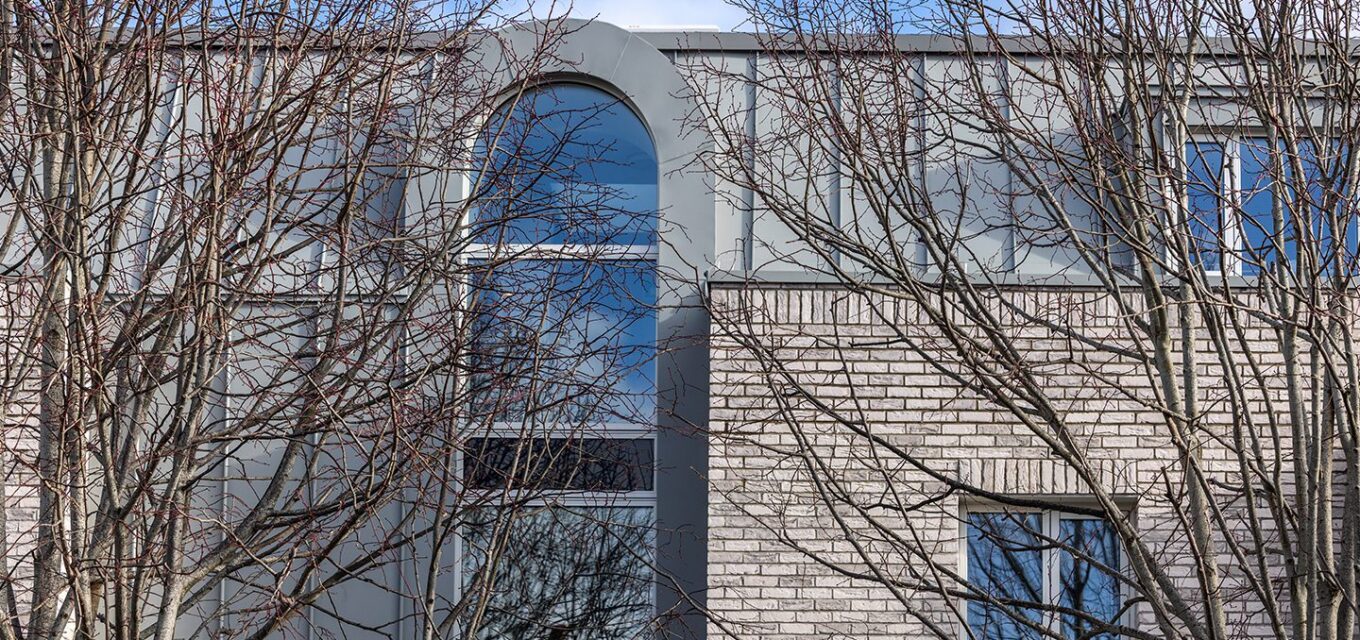
The contemporary aesthetic features a carefully curated material palette, including weathered grey brick and a muted green standing seam roof, developed through close collaboration with the Local Authority and conservation officer. Working hand-in-hand with these stakeholders, we refined the design to harmonise with the adjacent conservation area while establishing its own distinct character.
This collaborative approach enabled us to balance heritage sensitivities with modern requirements, resulting in subtle detailing and careful proportioning that respect the surrounding context while meeting the client’s ambitious sustainability goals.
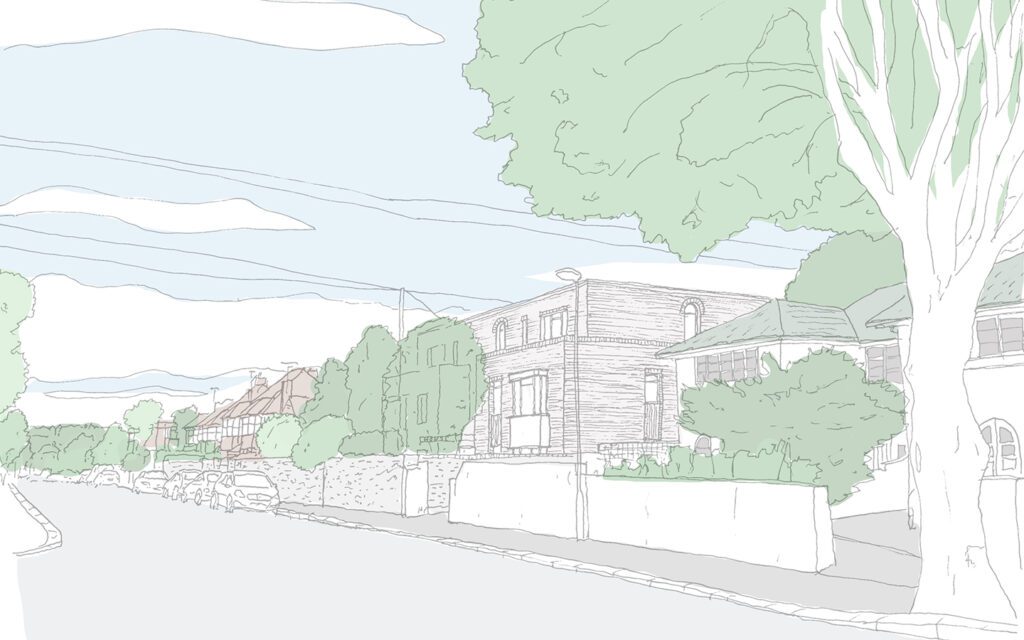
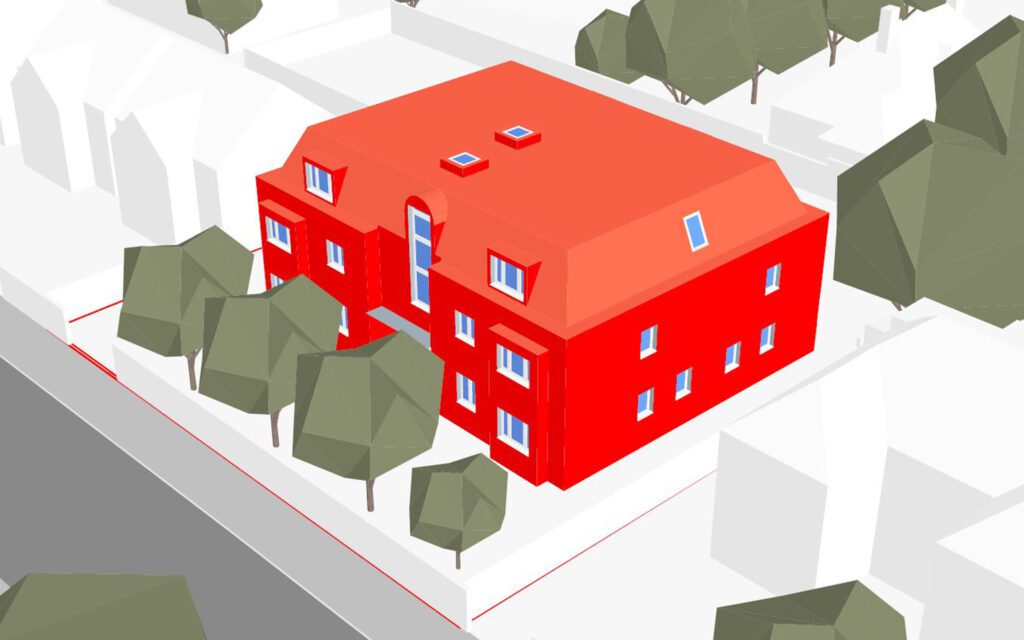
Implementing Passivhaus principles presented several unique challenges that our team skilfully navigated and required meticulous attention to thermal bridging and airtightness strategies – all while maintaining the design integrity and character of the scheme.
Preservation of key site characteristics was also at the heart of our thinking. The protected flint boundary walls required detailed condition surveys and bespoke repair specifications. Working closely with the arboriculturist and structural engineer, we developed a unique structural solution to address the challenges presented by a tree protection order. The collaborative design incorporated a beam and block floor with a ventilated void, carefully engineered to reduce disturbance to the tree’s root system while maintaining the exceptional thermal performance required for Passivhaus certification, demonstrating our ability to balance ecological sensitivity with technical excellence.
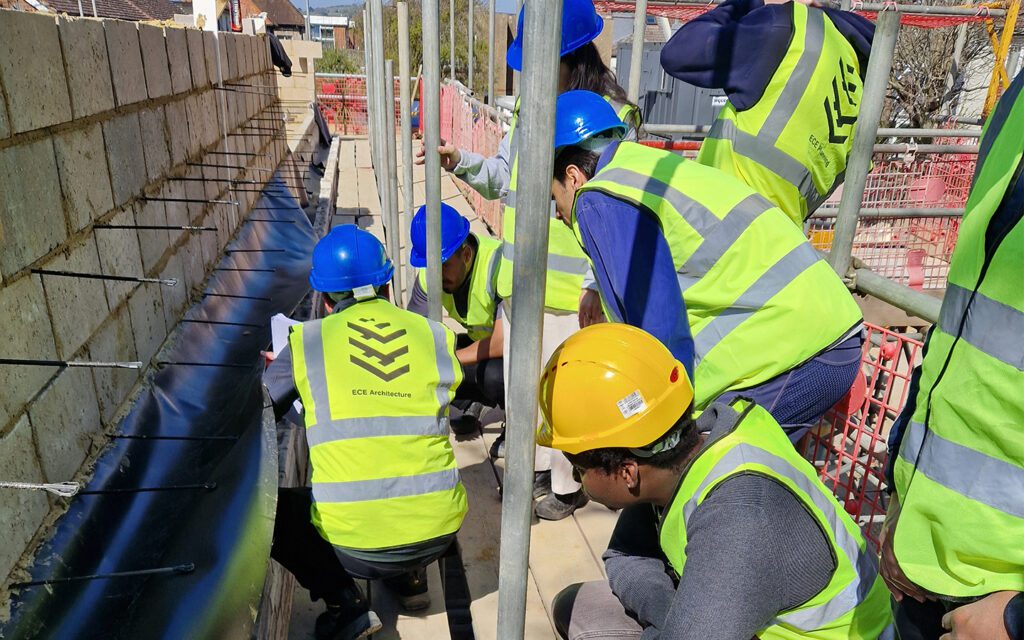
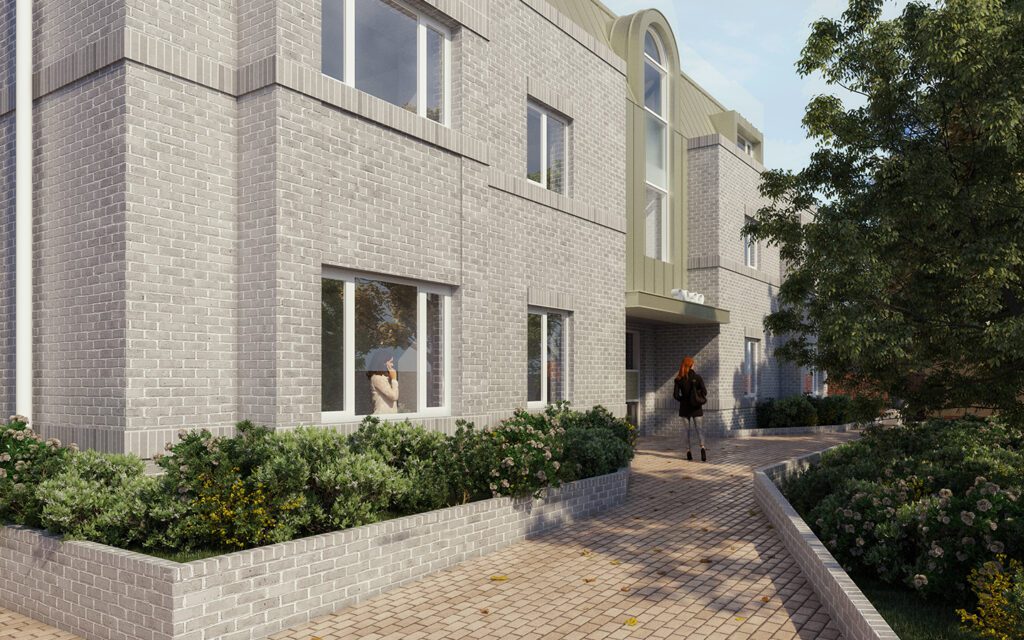
The project exemplifies our collaborative approach to technical innovation. Working closely with the council and quantity surveyors, we demonstrated that the modest cost uplift for Passivhaus standards delivered long-term value. Achieving exceptional airtightness was fundamental to meeting Passivhaus standards and delivering the project’s sustainability goals. This attention to airtightness not only enhances thermal efficiency but also improves acoustic performance, indoor air quality, and overall comfort for residents. The all-electric, low-carbon building features mechanical ventilation with heat recovery (MVHR) and hot water heat pump technology, creating comfortable, efficient living spaces that align with RIBA 2030 targets and our Architects Declare commitments.
This transformative project elevates standards for emergency accommodation, creating dignified spaces for vulnerable residents while delivering substantial operational savings. As one of the first Passivhaus schemes of its kind in the country, Victoria Road establishes a compelling case study for sustainable emergency housing that prioritises both human well-being and environmental responsibility.

What next?
Discover how we bring our clients’ vision to life. Browse our work to see creative excellence paired with technical precision.