Progress. Not perfection
At ECE, sustainability is not a side agenda. It’s part of how we design, advise and deliver.
Over the past year, we’ve continued to strengthen how environmental and social responsibility is embedded across our practice; from early design decisions to post-occupancy learning. At the same time, we’ve begun to explore what it could mean to become a more regenerative practice: one that not only reduces harm, but actively creates long-term value for people, place and planet.
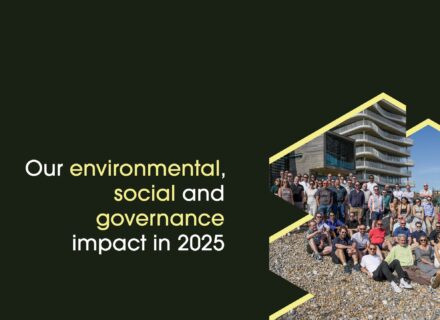
This report captures where we are in 2025. It shows a practice that is meeting, and in many areas exceeding, its commitments, while continuing to test, refine and improve how we work.
‘Reimagining what is possible’ is a continual process.
Why we publish this report
We believe progress should be visible and measurable.
Publishing our annual sustainability report allows us to share how we are responding to real-world pressures: climate risk, rising costs, shifting policy, and changing social needs. It shows how we are balancing technical performance with commercial reality; and why we believe the two belong together.
It’s also part of our commitment to continuous improvement. By tracking performance, sharing learning and being transparent about outcomes, we strengthen not just our own work but the wider conversation across our industry.
What’s inside
This year’s report reflects a practice that is focused on delivery. Inside you’ll find:
- Our continued progress on operational carbon reduction across our studios
- How ISO 14001 and ISO 9001 shape our environmental and quality systems
- Our growing Passivhaus portfolio and in-house expertise
- How we’re embedding whole-life carbon thinking earlier in design
- Our approach to retrofit, regeneration and long-term value
- How Post-Occupancy Evaluation is helping us close the gap between design intent and real-world performance
- How social value and community engagement are shaping our projects
These are not aspirations; they are active parts of how we work today, because our clients need projects that perform financially and environmentally.
A moment of transition
As we publish this report, we’re also marking a transition within our own team. Our Head of Sustainability, Patrick Osborne, leaves us in January after making a significant contribution to our journey. We’re grateful for his work and the foundations he’s helped us build.
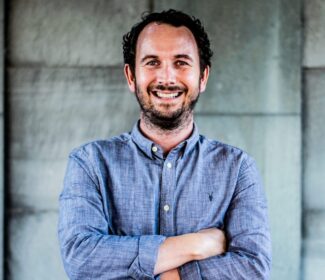
We’re pleased to introduce Doug Stewart in his extended remit as the Head of Social & Environmental Impact. The new title reflects where we believe the industry is heading and where we’d like to go.
What’s next
We are proud of what we’ve achieved and focused on what comes next.
Our journey toward becoming a more regenerative practice is about strengthening what already works: high-performance design, disciplined delivery, learning from buildings in use, and understanding how social and environmental value intersect.
This report is a snapshot of that journey in 2025.
We invite you to explore it and to be part of the conversation about how architecture can deliver lasting value.
Read the full ECE Group Annual Sustainability Report 2025 here.